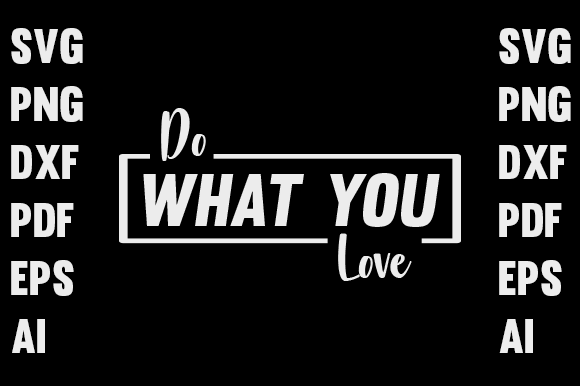
Do What You Love T-Shirt Design: Graphics & Print Templates
As a brand designer who’s built visual systems for 12+ small businesses—and as a content marketer who’s shipped hundreds of campaign assets—I opened Do What You Love T-shirt Design expecting charm, not depth. What I found was both: a deceptively simple graphic design asset with real strategic weight when placed intentionally.
A First Impression That Builds Audience Trust, Not Just Attention
The moment you preview it, Do What You Love T-shirt Design lands with warmth and quiet confidence—not loud, not trendy, but deeply human. It reads as lifestyle-first, values-driven, and handmade-adjacent—ideal for online coaches launching a new course, creative entrepreneurs building a content kit, or small business owners refreshing their social media graphics. It doesn’t scream “sale”; it whispers “this is who we are.” That subtle emotional tone builds audience trust faster than a flashy headline because it signals authenticity over algorithm-chasing.
Where This Graphic Design Asset Earns Its Keep in Real Campaigns
I recently used Do What You Love T-shirt Design to anchor a seasonal product launch for a sustainable stationery brand. We embedded the SVG into Pinterest pins, layered the PNG transparent version over hand-drawn blog headers, and printed the EPS on packaging inserts. In every context, it reinforced visual consistency without repeating itself—because its clean lines and balanced negative space let supporting copy breathe. It performed especially well in social media graphics, email banners, and printable promotions: always legible, never cluttered, and instantly recognizable across devices.
It’s equally effective in editorial design (as a decorative brand element beside pull quotes), Canva templates (scaled cleanly across preset dimensions), and digital ads where minimalism wins attention. As part of a design bundle, it adds warmth to otherwise clinical layouts—like pairing it with a serif font for blog graphics or a clean sans serif for Instagram carousels. And yes—it works beautifully in packaging design and product label accents, especially when paired with natural textures or muted palettes.
How It Strengthens Core Marketing Goals—Without Extra Work
This isn’t just clipart. It’s a commercial design that delivers measurable value: stronger first impressions by anchoring visuals with emotional clarity; clearer visual hierarchy by acting as a focal point that guides the eye; more consistent branding because its adaptable formats (SVG, PNG, AI, PDF) behave predictably across platforms; and improved audience trust by aligning with values-driven messaging. When used in lead magnets or media kits, it elevates perceived professionalism—no stock-photo fatigue, no generic vibe.
Best Fit: Hero Graphics, Branded Templates, and Decorative Brand Elements
Do What You Love T-shirt Design shines brightest where mood matters most: hero graphics for landing pages, campaign headers for email sequences, product launch visuals that balance personality and polish, and content bundles meant to feel curated, not assembled. Use it as a social media cover accent, a packaging accent on tissue paper or tags, or a decorative brand element in editorial layouts—always letting it complement, not compete.
Use With Intention—Not Everywhere
It’s not a universal fix. Avoid dropping it into formal corporate branding, dense information layouts, or text-heavy ads where clarity trumps charm. It loses impact on low-contrast backgrounds or when scaled too small—so skip using it as micro-iconography or in tight mobile banners without testing readability first. And if your brand voice leans ultra-minimalist or high-tech, this modern design may feel tonally misaligned unless carefully contextualized.
Brand Designer Notes: Test, Layer, Verify
Before committing: test it with your brand color palette—does it harmonize in both full color and grayscale? Check black-and-white usage for contrast and detail retention. Place it inside real campaign mockups, not just isolated previews. Preview it on mobile screens at actual size—especially if repurposing for Stories or Reels. Compare it against competitor visuals to ensure distinction, not similarity. Then, review how it pairs with your fonts: it holds up beautifully with serif, sans serif, and even display fonts—but test spacing and balance each time. Finally, confirm commercial licensing. Since you’ll receive this design in multiple formats—including SVG, PNG transparent, DXF, EPS, AI, and PDF—it’s built for real-world use, but always verify permissions for paid campaigns, client work, or permanent brand integration.
Why Creative Entrepreneurs Reach for This Design Asset Again and Again
In the creative marketplace, where visual fatigue is real and attention is scarce, Do What You Love T-shirt Design stands out not for complexity—but for clarity of intent. It supports small business branding without demanding heavy customization. It elevates digital product launches and printable design kits with instant cohesion. And because it ships as versatile design assets, it scales from Instagram post to product label to editorial layout—without losing its soul. For marketers building campaigns that feel human first, this is less a graphic and more a quiet brand ally.