Good Things Coffee T-Shirt Design: A Real Embroidery Review
The First Glance: A Warm, Inviting Vibe That Fits Coffee Lovers
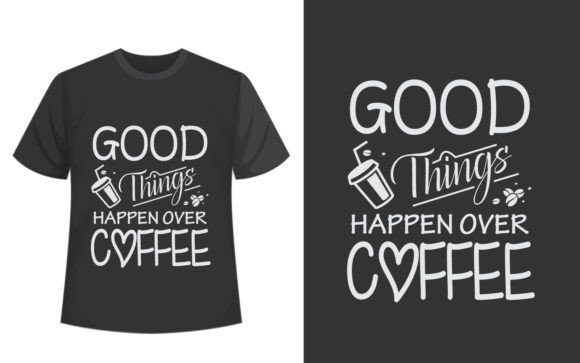
When I first opened the Good Things Coffee T-Shirt Design, I immediately felt that cozy, slow‑morning energy. The phrase “Good Things Happen Over Coffee” has a handwritten feel that reads like a personal motto, not a stiff slogan. The lettering is round, inviting, and slightly playful without looking childish. As someone who stitches dozens of phrases every month, I look for designs that carry a mood people want to wear or display. This one naturally fits coffee enthusiasts, brunch lovers, gift shoppers, and anyone who builds their morning around a warm mug.
The layout is balanced and easy to scan, which matters a lot when you translate vector artwork into stitches. You can almost imagine it sewn onto a soft sweatshirt or a kitchen towel. The space between letters feels generous enough that satin columns won’t collapse into each other once digitized, and the descenders and ascenders stay gentle, not jagged. The coffee cup icon often included in this kind of design—if it’s present in this particular version—tends to be simple and avoids overly delicate curls that become a headache in tiny hoops. However, since the product description spotlights the phrase, I’m focusing on the typography, and frankly, it’s the right kind of clean.
Where This Design Shines In Real Embroidery Projects
Over years of preparing designs for craft fairs, Etsy shops, and personalized orders, I’ve learned that a strong coffee‑themed design can sell across so many product categories. The Good Things Coffee T-Shirt Design isn’t limited to t‑shirts at all. I see it working beautifully on:
- Tote bags – A cream canvas tote with dark espresso thread, using a filled satin font, looks elevated and farmer’s market ready.
- Sweatshirts and hoodies – For a cozy gift, the phrase stitched on the front chest brings a boutique coffee‑shop vibe. Thick fabric holds the design securely.
- Aprons and kitchen towels – A classic home‑gift option. Pair with a few coffee bean motifs, and you have a bridal shower or housewarming bestseller.
- Pillow covers and tea towels – When you use a soft fill stitch or a distressed running stitch, the message feels even more handmade and warm.
- Patches – If you clean up the edge and add a satin border, the design can become an iron‑on or sew‑on patch that coffee lovers pop onto jackets or backpacks.
- Baby onesies and kids’ tees – The phrase is wholesome and safe; a tiny shirt with “Good things happen over coffee” paired with a parent’s matching design makes a relatable set.
The mood works across genders and ages, which is ideal for small shops that need to avoid overly niche themes. And because the file comes in vector formats (AI, SVG, PDF), you have the freedom to scale it to different project sizes without losing quality—essential when jumping from a 4×4 hoop on a cap to an 8×8 hoop on a tote back.
From Screen to Stitch: What Needs Your Attention
The Good Things Coffee T-Shirt Design is a vector artwork, not an embroidery file. It arrives as AI, SVG, PNG, and PDF at 300 DPI, but none of those are ready to load into your machine. You or your digitizer will need to convert it into a stitch file. Here’s what I always check:
- Inspect tiny details – If the design includes a mini coffee cup or steam swirls, they can become blobs on fleece or knits unless simplified. Always test on scrap fabric first.
- Check the smallest lettering – Fine handwriting or sub‑text can drop below 5mm, making satin stitches pull fabric or look messy. You may need to enlarge slightly or switch to a cleaner running stitch.
- Identify overlapping paths – In vectors, overlapping objects are fine, but in embroidery they become dense needle strikes. You might need to merge shapes or adjust the stitching sequence to prevent thread breaks.
- Confirm hoop size with real margin – Never push the design to the edge of a 4×4 hoop. Leave at least half an inch for the hoop to clamp fabric without biting into the stitches. Measure the final embroidery field, not just the visual bounding box.
These aren’t flaws of the artwork; they’re the realities of turning any print‑ready graphic into a stitched product. Because the designer made the file 100% editable, you can tweak the coffee cup size or rewrap the phrase in Illustrator before sending it to your digitizing software.
Fabric Choices That Make or Break the Look
The message “Good Things Happen Over Coffee” relies on readable, rounded letters, so thin or stretchy substrates can warp them quickly. In my studio, I test every design on a few stubborn fabrics. Here’s where I’d be cautious:
- Stretchy t‑shirt knits – They demand a cut‑away stabilizer and careful hooping. Without support, the loops of letters like “o” and “e” can ovalize. I’d slightly reduce stitch density to let the design move with the fabric.
- Dark or heavily textured fabrics – A dark navy sweatshirt can hide thin letter strokes. I’d thicken the font or add a satin underlay that shows a hint of lighter thread. Always test on black fabric before a 20‑piece order.
- Terry cloth or waffle weaves – Kitchen towels and some robes have deep texture that swallows small fill stitches. Use a heavier satin border and a medium‑weight topper.
- Baby rib knits – Those tiny ribs can make lettering look wavy. It’s doable, but you’ll need to baste and secure thoroughly. I sometimes enlarge the phrase for baby blankets instead of onesies.
On the flip side, cotton canvas, linen blends, denim, and felt are all dream fabrics for this design. The smooth surface lets each stitch definition shine, and the message feels crisp and premium.
A Real Morning: The Custom Apron Project That Sold Out
Last month a friend who runs a small coffee cart asked me to create a small run of customized aprons for her baristas. She wanted something charming that customers would notice during a latte handoff. I digitized the Good Things Coffee T-Shirt Design for the apron bib after seeing how warm and relatable the phrase is. I adjusted the colors to match her brand—soft sage green thread on natural cotton—and sewed it out at about 5.5 inches wide. The result looked like a designer piece, not a generic transfer. Her customers started asking where they could buy one, and she sold all twelve aprons the first week. That’s the kind of commercial impact a thoughtful embroidered phrase can have when the base design is clean enough to translate beautifully.
This scenario isn’t unique. I can picture the same design on tote bags for a coffee subscription box, on pillow covers for a cozy reading nook set, or on mini framed hoops as desk decor. The medium doesn’t matter as much as the feeling the phrase delivers—a quiet, approachable comfort.
How the Design Affects Brand Consistency and Customer Trust
If you’re an Etsy seller or a craft business owner, the designs you choose shape your shop’s personality. The Good Things Coffee T-Shirt Design sits in that comfortable zone of neutral‑but‑warm. It doesn’t try too hard to be trendy, so it won’t look dated next season. The message is universal enough to appeal to a mother, a coworker, or a college student, widening your listing appeal. I’d confidently use it for:
- Personalized gifts – Add a name or a small date underneath, and it becomes a memorable anniversary or Mother’s Day present.
- Small shop merchandise – A consistent design across t‑shirts, mugs (using printable transfers), and tote bags creates a cohesive brand look.
- Printable mockups and digital product bundles – The 300 DPI PNG and PDF files let you create clean mockups for Etsy listing photos. Just be transparent with buyers: they’re getting vector artwork, not a finished embroidered item.
The CMYK, print‑ready color tells me the creator understands production, which adds a layer of trust. When stitching, you’ll match thread colors to that mood anyway, so starting from a well‑profiled palette helps.
Critical Designer Notes Before You License or Sell
Since this is a digital design asset, check the licensing terms before you use it commercially. The product page promises an editable vector, but you need to know if you can sell finished physical products, digital embroidery files, or downloadable mockups made from it. Many designers allow physical end products but restrict reselling the original file or digitized versions. I always contact the seller if the license isn’t explicit—a quick message can save a copyright headache.
Additionally, embed these habit checks into your workflow:
- Run a test stitch on similar fabric before your final product, especially on curved surfaces like caps or the edge of a pillow.
- Evaluate thread color contrast in both bright and low light. That espresso brown thread might look perfect in daylight but muddy under café lighting. I often take a stitched sample to a cozier room to be sure.
- Check the design in black and white temporarily in your software. If the phrase disappears without color, you may need to adjust stroke thickness—a good vector design holds its shape even in monotone.
- Consider satin stitch direction for each letter. The natural flow of the text should guide the stitch angle. If you’re self‑digitizing, avoid random angles that distract the eye.
- Test at least two hoop sizes. What looks perfect at 5 inches may crowd the space at 3.5 inches. The Good Things Coffee T‑Shirt Design scales smoothly thanks to the vector format, but tiny hoops may still require simplifying or removing a secondary element.
Versatility That Grows With Your Product Line
I like that the design isn’t pinned to a single season. Coffee is a year‑round ritual. You can stitch it on cozy fleece blankets for winter, light linen towels for summer, and woven patches for festival season. The phrase also lends itself to celebrations: Christmas “coffee first” gifts, Valentine’s Day couple sets, Mother’s Day matching aprons, and even wedding welcome bags with a small embroidered sachet. When I plan my product slate, I look for designs that can flex across holidays without screaming a date. This one does exactly that.
For digital product sellers who offer embroidery file downloads, you could digitize the design once (after verifying the license) and sell it in multiple hoop size versions, accompanied by clear photos of the stitched sample. Shoppers on Etsy love seeing the actual embroidery, not just the vector preview. That real‑life proof dramatically boosts conversion because they can imagine the puff of the thread and the texture on a crewneck.
Final Thoughts From the Embroidery Angle
The Good Things Coffee T-Shirt Design is genuinely usable artwork for embroidery professionals and hobbyists, as long as you treat it as a starting canvas, not a finished embroidery file. The lettering style is clean enough to hold up under satin stitch, the mood is broad and marketable, and the editable vector format gives you tremendous control. Keep in mind that very small text details may need simplification, and you’ll want to watch fabric stretch and stabilizer choice on garments.
But the heart of this design—the warm, everyday affirmation—is something customers reach for. In my experience, that’s the secret ingredient: a phrase that feels like a shared truth, stitched into a tangible product. Whether you’re hooping a tote bag for a craft fair, a sweatshirt for a boutique drop, or an apron for a local café, the Good Things Coffee T-Shirt Design will likely deliver that smile‑and‑nod reaction that turns a browser into a buyer.